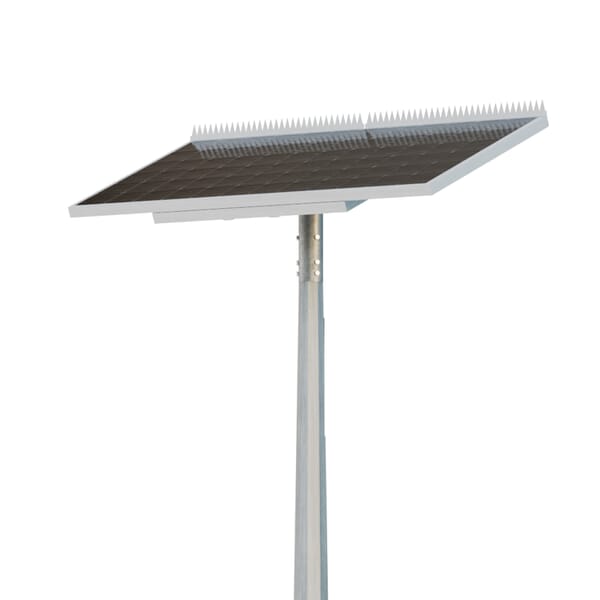
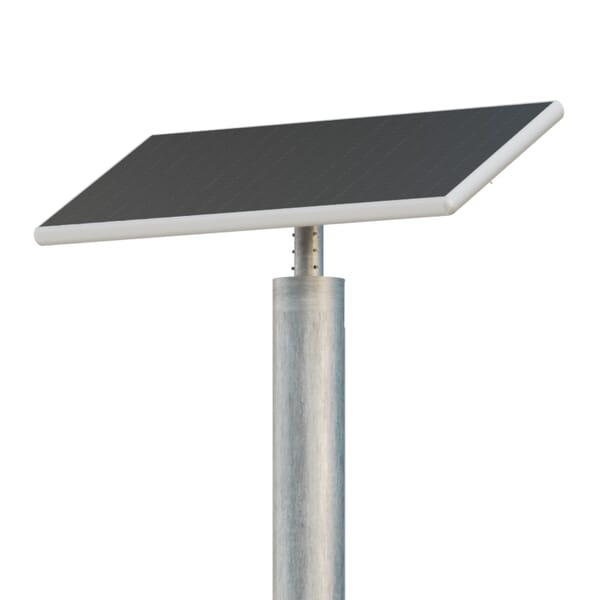
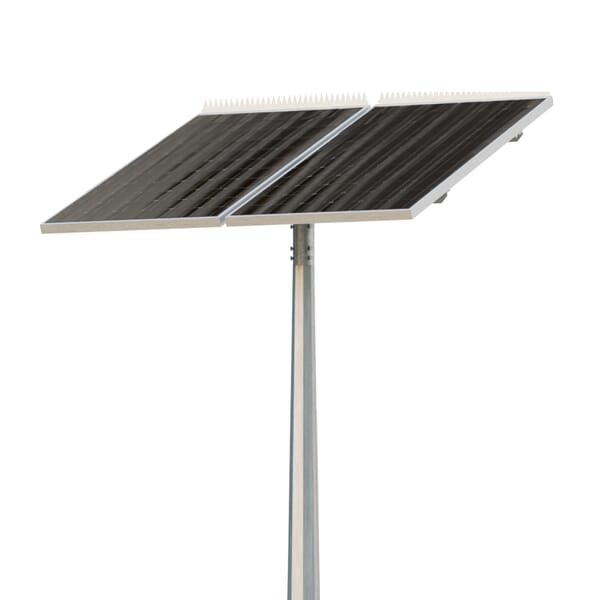
Aeromax Dual-ES

Modular Energy Storage System

The AEROMAX DUAL-ES energy storage system uses a twin-panel 220 Wp configuration with scalable battery options, supporting extended runtimes of up to 8 nights without recharge.

Designed for critical infrastructure and remote assets where continuous, standalone power is essential.

Category:

Description

Aeromax Dual-ES solar energy storage system

The Aeromax Dual-ES is the twin panel configuration of the Aeromax energy storage range, built for critical infrastructure and remote assets that need continuous standalone power. Two 110 Wp monocrystalline panels (220 Wp total) charge two, four or six LiFePO4 modules housed within the solar modules.

Storage runs from 921.6 Wh to 2,764.8 Wh, with an estimated 4 to 8+ nights of autonomy depending on load and location. A DC charging input and an output for add on devices are standard, and the lightweight 6063-T5 aluminium housings carry a TIGER Drylac marine grade powder coat in black or silver.

It mounts on a 6 m base hinge pole, a 9 m or 10 m slip base pole, or a portable ballast block with no civil works, and is rated for wind regions A to C. Each system carries a 5 year complete unit warranty.

Key Features

220 Wp solar capture. Twin 110 Wp monocrystalline panels on a dual panel mount.

Scalable LiFePO4 storage. 2 / 4 / 6 × 36 Ah modules of 460.8 Wh, rated for 2,000 – 6,000 cycles.

Power on tap. DC charging input and an output for add on devices, standard on every unit.

Marine grade build. 6063-T5 aluminium with TIGER Drylac powder coat in black or silver, IP68 controller and connectors.

Fixed or portable. 6 m base hinge, 9 m and 10 m slip base poles, or a ballast block for temporary and relocatable sites.

Optional control. Bluetooth module and remote, and a pole mounted on/off switch.

Technical

Solar & Battery
Solar Panels 2 × 110 Wp monocrystalline (220 Wp total)
Panel Efficiency Rating 21%
Battery Type LiFePO4, 12.8 V × 36 Ah modules housed in the solar modules, passive cell balancing
Battery Capacity 921.6 / 1,843.2 / 2,764.8 Wh (2 / 4 / 6 modules)
Nominal Voltage 12.8 V DC
Life Cycles 2,000–6,000, depending on use and conditions
Charge Controller Programmable smart MPPT with advanced BMS
Estimated Autonomy (1) 4–8+ nights
Operation
Ports 1 × DC charging input; 1 × output for add-on devices
Controls Bluetooth module and remote, pole-mounted on/off switch (optional)
Mounting
Pole Fitting Dual panel mount, adjustable −60° to +60°, 60 mm OD spigot
Pole Options 6 m base hinge pole
9 m and 10 m slip base poles
Portable ballast block (1.0 m or 1.1 m)
Mounting Height 6–9 m
Wind Regions A–C, with panel tilt limits per region (2)
Design & Compliance
Solar Modules 2 × 740 × 721 × 70 mm; 46.2–66.6 kg (2–6 modules)
Material 6063-T5 aluminium alloy, suitable for marine environments
Finish TIGER Drylac marine-grade powder coat, black (RAL 9011) or silver (RAL 7000)
IP Rating IP68 controller and connectors
Operating Temperature −20 °C to +60 °C
Security Options Bird guards, solar panel stone guards (optional)
Certifications CE, FCC, ISO 9001
Warranty 5-year complete unit warranty

(1) Autonomy and available capacity depend on location, load and configuration. (2) Region A: 15° tilt; Region B: 15°, 30° or 45°; Region C: 15° or 30°. Ballast block installations are rated to Region A. Confirm pole, tilt, terrain and footing for each site.

FAQ

What is the difference between the Aeromax Dual-ES and the Aeromax 220?

The Dual-ES is solar capture and battery storage only. Add the Aeromax luminaire and it becomes the Aeromax 220 street light.

Aeromax-ES or Dual-ES?

The Dual-ES doubles the solar input to 220 Wp and takes up to six modules (2,764.8 Wh), for higher loads and longer runtimes.

Can it be installed without footings?

Yes. A portable ballast block holds the base hinge pole, with no civil works, for sites rated to wind region A.

What wind regions can it be installed in?

Regions A to C under AS/NZS 1170.2, with the panel tilt set to suit the region.

What maintenance does it need?

Very little. Clean the solar panels periodically; LiFePO4 modules last 2,000 to 6,000 cycles depending on use.