ST-900

Mobile Solar Flood Light Tower

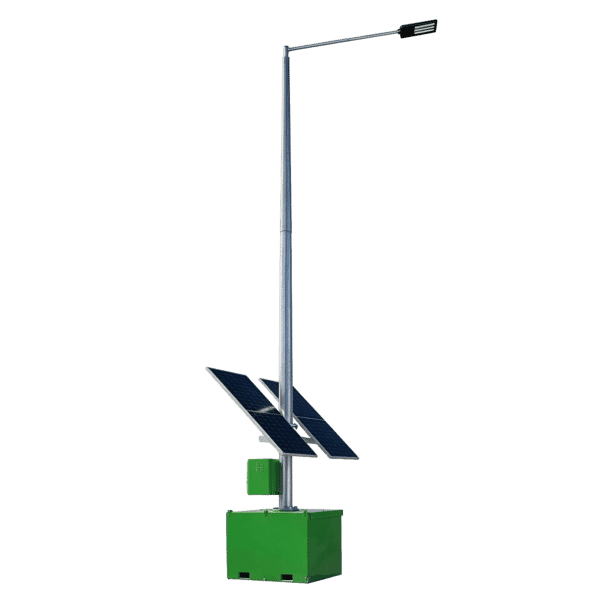
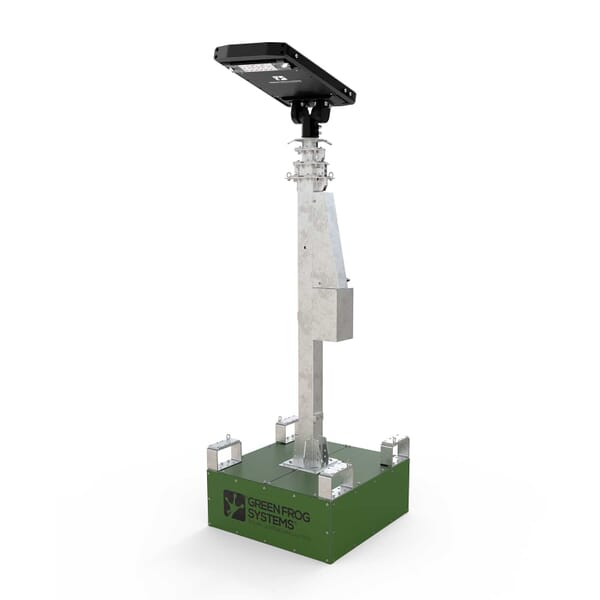
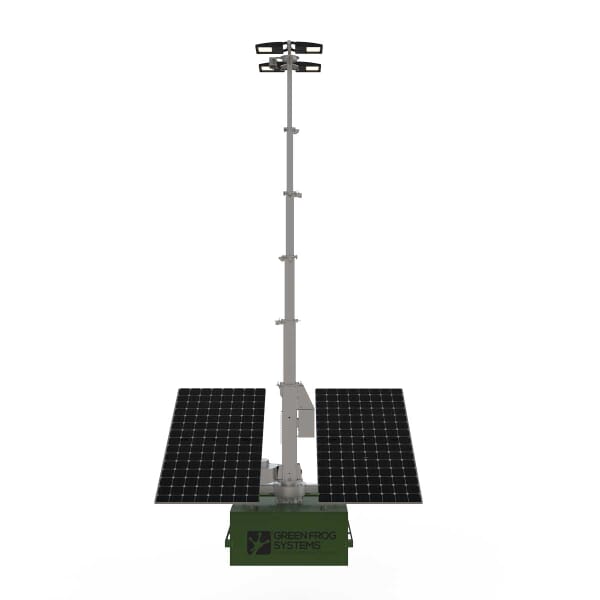
The ST-900 is a mobile solar lighting trailer with two 450 W mono-crystalline panels (900 W total) that rotate 340° and fold for transport. It can be fitted with up to four 116 W dimmable LED lights delivering up to 91,332 lumens.

Solar and AC charging options suit construction sites, remote worksites and outdoor events.

Download ST-900 Data Sheet

Category:

Description

ST-900 solar flood light trailer

The ST-900 is a mobile solar flood light trailer for construction sites, remote worksites and outdoor events. Two 450 W monocrystalline panels (900 W total) rotate 340° and fold electrically for transport, charging a LiFePO4 battery of 5,120 Wh or 10,240 Wh.

It takes two or four 116 W dimmable LED floodlights, delivering 45,666 or 91,332 lumens from a 9 m telescopic mast. Solar charging takes around 7 hours, and AC charging is available as a backup.

The hot dip galvanised trailer is set up by one person, and the mast is rated to 118 km/h at full height with the outriggers deployed. It runs silently with zero emissions. Each system carries a 5 year complete unit warranty.

Key Features

900 W of solar. Two 450 W monocrystalline panels that rotate 340° and fold electrically for transport.

Up to 91,332 lumens. Two or four 116 W LED floodlights, dimmable 0 to 10 V with adjustable angle.

9 m mast. Telescopic mast adjustable from 2 to 9 m on a manual winch, rated to 118 km/h with outriggers deployed.

Solar and AC charging. Around 7 hours to charge on solar, with AC trickle charging as a backup.

LiFePO4 storage. 5,120 Wh or 10,240 Wh with an integrated BMS.

One person setup. Electric unfold for the panels and four adjustable stabilisers.

Road ready. Single axle with mechanical brakes, 13 inch wheels and a 50 mm ball coupling.

Technical

Model
Part Number GFS-ST-900
Lighting
LED Quantity 2 or 4 floodlights
LED Power 116 W each (up to 464 W)
Delivered Lumens 45,666 lm (2 floodlights)
91,332 lm (4 floodlights)
Efficacy 197.7 lm/W (luminaire)
CCT 3000K
Light Coverage 30 m radius at 10.76 lux average
12 m radius at 215 lux average
Features Dimmable 0–10 V; adjustable angle; suits 24 VDC or AC luminaires; floodlight or street light options
Solar & Charging
Solar Panels 2 × 450 W monocrystalline (900 W total)
Panel Efficiency Rating 21%
Panel Rotation 340° horizontal (manual)
Panel Folding Electric fold, unfold and storage
Solar Controller Green Frog Systems
Charging Mode Solar / AC
Solar Charging Time (1) 7 hours (typical)
AC Trickle Charging 9–24 hours
Battery
Battery Type LiFePO4 with integrated BMS
Battery Capacity 51.2 V 100 Ah (5,120 Wh)
51.2 V 200 Ah (10,240 Wh)
Max Sustained Load (1) 5–500 W, set by solar yield
System Voltage 51 V / 24 VDC low voltage
Mast
Adjustable Height 2–9 m
Lifting Type Manual winch
Max Mast Load 60 kg
Mast Cabling Internal 2 × CAT6 + 4 × 2.5 mm²; external LED power
Max Wind Speed 118 km/h at full height, outriggers deployed
Trailer
Axle Single
Brakes Mechanical
Wheels 13 inch
Coupling 50 mm ball
Max Towing Speed 104 km/h
Stabilisers 4 × adjustable, with front jockey wheel
Dimensions
Stowed 1,400 × 2,000 × 1,500 mm
Deployed 3,000 × 3,000 × 9,000 mm
Weight 0.8 t (2 batteries)
Material Hot-dip galvanised steel
Compliance
Certifications TUV and UL on various components
Warranty 5-year complete unit warranty

(1) Charging time and sustained load depend on irradiance, panel angle, shading and other site conditions.

FAQ

How long does it take to charge?

Around 7 hours on solar in typical conditions. AC trickle charging takes 9 to 24 hours.

How much light does it give?

45,666 lm with two floodlights or 91,332 lm with four, lighting a 30 m radius at around 10.76 lux.

Can it power other equipment?

Yes. Depending on location and solar yield it can supply loads of 5 to 500 W.

How tall is the mast?

The telescopic mast adjusts from 2 to 9 m on a manual winch.

How windy can it get?

The mast is rated to 118 km/h at full height with the outriggers deployed.

Does it need fuel?

No. It runs on solar with battery storage, silently and with zero emissions, with AC charging as a backup.